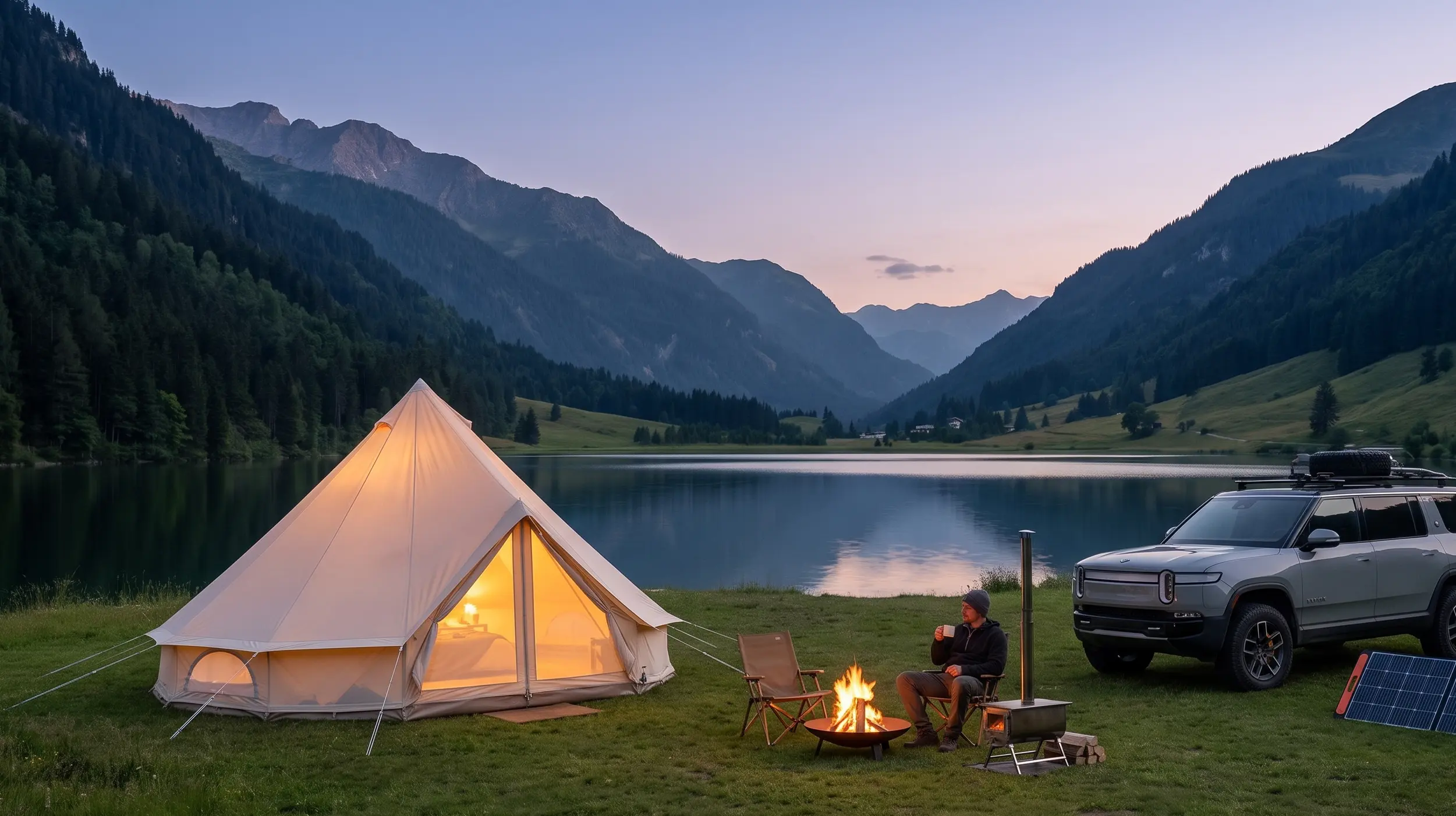
Quick Summary: Best Glamping Tents of 2026
The outdoor industry is shifting toward luxurious, 4-season shelters that replace flimsy frames with heavy-duty canvas and high-pressure inflatable air beams. Based on a comprehensive review, here are the top picks for 2026:
- Coody 10.0 PRO Inflatable Tent: Best overall choice. Utilizes high-pressure TPU air beams for an effortless, pole-free setup and provides a spacious 8.33 m² interior with full standing headroom.
- Karma 5M Organic Cotton Bell Tent: Best classic heavy-duty option. Features 100% organic cotton canvas and 19.6 m² of floor space, ideal for large groups or semi-permanent setups.
- Whiteduck Regatta Canvas Bell Tent: Best compact option. Highly portable 14 kg DYNADUCK canvas shelter built for quick weekend car camping trips.
Pro Tip: When evaluating a 4-season tent, look for breathable cotton or polycotton fabric, a built-in stove jack, and replaceable components for easy field maintenance.
Side-by-Side Spec Comparison: Top 3 Glamping Tents
|
Feature / Specification |
1. Coody 10.0 PRO Inflatable Tent |
2. Karma 5M Organic Cotton Bell Tent |
3. Whiteduck Regatta Canvas Bell Tent |
|
Primary Category |
Heavy Duty Inflatable Air Tent |
Traditional Heavyweight Canvas Bell Tent |
Compact Canvas Car Camping Tent |
|
Frame Structure |
High-Pressure TPU Air Beams |
Single Steel Center Pole & A-Frame |
Central Steel Pole & Door Frame |
|
Usable Interior Area |
8.33 m² (~89.66 sq ft) |
19.6 m² (~210 sq ft) |
7.0 m² (~75 sq ft) |
|
Outside Peak Height |
2.05 m (80.7 in) |
3.0 m (118 in) |
2.1 m (82.6 in) |
|
Inside Wall Height |
1.62 m (63.78 in) |
0.6 m (23.6 in) |
0.4 m (15.7 in) |
|
Total System Weight |
31.0 kg (68.34 lbs) |
36.0 kg (79.3 lbs) |
14.0 kg (30.8 lbs) |
|
Fabric Composition |
Premium Cotton Canvas / Polycotton |
100% Organic Cotton (360gsm) |
DYNADUCK Water-Repellent Cotton |
|
Stove Pipe Jack |
Built-in (90 mm / 3.54 in) |
Pre-cut Hole with Velcro Cover |
Built-in Fire-Resistant Jack |
|
Ventilation & Windows |
4 Windows, 2 Doors, TPU Panes |
4 Zipped Windows, Mesh Door |
Roof Vents, Mesh Windows & Door |
|
Included Accessories |
Full Repair Kit, Pegs, Organizers |
Steel Pegs, Guy Ropes, Bag |
Metal Tensioners, Stakes, Bag |
Have you ever stood in the pouring rain, desperately trying to thread aluminum poles through snagging fabric channels while your family looks on in sheer disbelief? If so, you already understand why the outdoor industry is undergoing a massive revolution. In 2026, the boundary between wilderness survival and high-end hospitality has dissolved, allowing adventurers to embrace nature without forfeiting an ounce of domestic comfort. Choosing the ideal glamping tent requires a fundamental shift in mindset—moving away from minimalist backpacking tents toward spacious, climate-controlled sanctuaries designed for true outdoor living.
To make an informed investment when you buy a camp shelter, you must first master the technical mechanics of structural support and material composition. Traditional camping relied heavily on heavy steel frames or flexible fiberglass poles that inevitably bent under pressure. Modern inflatable tent designs, however, replace rigid skeletons with high-pressure thermoplastic polyurethane air beams that absorb hurricane-force wind gusts and bounce right back into shape. Meanwhile, heavy duty canvas tent models act as breathable, living membranes that regulate internal humidity and keep condensation from accumulating inside the tent during cold winter nights.
What specific features should dictate your final purchase decision when evaluating the best camping tents of 2026? First, consider your intended usage: are you seeking a semi permanent installation for a commercial resort business, a cozy backyard retreat, or a portable luxury setup for a weekend car camping trip? Look for crucial technical specs like standing height clearance, multi-door access, a built-in stove jack for a wood stove, and a high waterproof rate. A truly premium glamping tent offers 4 season versatility, replaceable components, and extra interior space that comfortably accommodates a large family or a couple with ease.
How to Choose the Best Luxury Glamping Tent for Year-Round Wilderness Living
Selecting the ideal glamping tent requires evaluating how different designs perform across all four seasons. A quality 4 season shelter must balance structural stability against heavy snow loads with effective ventilation during sweltering summer afternoons. While traditional bell tent designs feature sweeping sloped roofs that shed rain effortlessly, modern cubic dome tents offer superior vertical wall height that drastically increases livable floor space near the edges.
"Architecture is the learned game, correct and magnificent, of forms assembled in the light," Le Corbusier famously observed, and this principle applies just as deeply to mobile canvas shelters. When evaluating tent options, fabric density is paramount. Heavyweight cotton canvas and polycotton blends insulate internal temperatures far better than paper-thin synthetic polyester, creating a quiet, draft-free haven when howling winter wind batters your campsite.
Furthermore, consider the long term maintenance requirements of your investment. A tent is designed to be your primary fortress against the elements, meaning every zipper, guyline, and valve will eventually experience wear and tear. Premium manufacturers now prioritize repairability, supplying field repair kits and modular parts so that a minor tear or damaged valve never cuts your camping trip short.
Top 3 Glamping Tents on the Market: The Definitive 2026 Review & Comparison
Navigating the crowded outdoor gear market demands an analytical eye, especially when choosing among the best glamping tents available today. Our team evaluated dozens of tents on the market, scrutinizing fabric weights, hydrostatic head waterproof ratings, wind shear resistance, and pitch times. We paid special attention to how each structure manages internal airflow, insulates against winter frost, and resists mol and UV degradation over extended outdoor deployments.
Below is a side-by-side technical specification matrix comparing our top three picks. This transparent data highlights core differences in structural frame tech, floor dimensions, fabric materials, and total packed weight. Analyzing these key metrics will help you choose the ultimate tent for your group size, payload capacity, and target environment.
As the comparison matrix illustrates, frame design dramatically dictates usable vertical space. While tall bell tent configurations boast impressive center heights, their steep roof angle reduces headroom near the perimeter. In contrast, cubic inflatable models maintain consistent standing clearance across the floor plan. Let us inspect each flagship in detail.
1. Coody 10.0 PRO Inflatable Tent (The Ultimate Pinnacle of Luxury Air Tents)
When engineering brilliance meets refined aesthetic design, the result is the Coody 10.0 PRO inflatable tent. Earning the undisputed top rank in our review, this flagship air tent eliminates complex metal pole assembly entirely. In its place, thick, high-pressure air pillars inflate in minutes, erecting a rigid structure with an exterior peak height of 2.05 meters (80.7 in) and an expansive interior feel. Setting up a glamping basecamp becomes an effortless affair, allowing a single person or couple to construct a luxury retreat without hassle.
The technical dimensions of the Coody 10.0 PRO are carefully calibrated for maximum comfort and space efficiency. Providing 8.33 square meters (89.66 sq ft) of usable area, the floor spans 3.5 meters from corner to wall, easily accommodating queen-sized beds and lounging gear. The structure features a durable external canvas tent paired with an insulating inner tent and a heavy-duty removable Oxford floor. Air circulation is phenomenal, featuring 4 oversized mesh windows with clear TPU velcro panes and 2 full-height entrances that let natural light flood in while keeping insects outside.
Four-season adventurers will appreciate the pre-installed 90 mm (3.54 in) stove jack, allowing safe stove pipe venting for warm winter hot-tenting. Coody excels by packing a full spare parts kit directly in the box—complete with Oxford patch glue, extra guyline cylinders, screed locks, and replacement attachment hardware. "In the depth of winter, I finally learned that within me there lay an invincible summer," Albert Camus famously wrote, and inside the Coody 10.0 PRO, that warm sanctuary is always guaranteed. It stands as the finest inflatable luxury tent available for sale today.
2. Karma 5M Organic Cotton Bell Tent (The Classic 4-Season Heritage Shelter)
For glampers who adore the natural look and acoustic dampening of traditional cotton, the Karma 5M bell tent claims a strong second place. Inspired by 19th-century military Sibley designs, this 20ft circular bell tent creates an unmistakable presence on any campsite. Crafted from 100% organic cotton canvas (360gsm), it offers a quiet, breathable environment that traps heat during freezing winter nights while remaining cool under hot summer sun.
Spanning 5 meters across, the Karma 5M tent yields 19.6 square meters of floor space, making it a favorite for large family gatherings or commercial glamping resort setups. It comes fitted with a heavy duty zip-in groundsheet (ZIG) made from 580gsm PVC, four meshed windows, and a pre-cut stove hole protected by a velcro canvas cover and PROBAN fireproofing. Its central steel pole rises to a 3.0-meter peak height, producing an open atmosphere that accommodates multiple beds and lounge tables.
However, traditional bell tent mechanics carry noticeable trade-offs compared to modern air beam systems. Tipping the scales at 36 kg (79.3 lbs) with rigid steel center poles, pitching requires significant physical effort and guyline tuning. Additionally, pure cotton canvas must be thoroughly dried before storage to prevent mold growth. Still, if you want a long term semi permanent setup for your backyard or resort business, the Karma 5M bell tent remains a magnificent, durable choice.
3. Whiteduck Regatta Bell Tent (The Best Compact Canvas Option)
Taking third place on our podium is the Whiteduck Regatta canvas tent, an exceptionally practical shelter optimized for weekend car camping trips. While massive glamping domes can feel cumbersome for short getaways, this compact bell tent offers authentic canvas breathability in a manageable, highly portable package. It caters perfectly to couples and small families who desire premium comfort without overloading their vehicle.
Constructed with Whiteduck’s signature DYNADUCK cotton canvas, the Regatta is pre-treated with a water-repellent, UV-resistant, and mold-resistant finish. It features a 2.1-meter center peak height, double-stitched reinforced seams, and a heat-resistant stove jack hole for winter hot-tenting. Despite its smaller footprint, it offers comfortable standing height near the center and includes bug mesh on both the main door and perimeter windows.
The primary downside of the Regatta lies in its low 0.4-meter (15.7 in) sidewalls, which restrict standing room near the perimeter compared to the boxy, high-walled Coody 10.0 PRO. Furthermore, because the groundsheet is sewn directly to the canvas wall, you cannot roll up the sides to form an open canopy on hot days. Nevertheless, at an affordable price point and a total weight of just 14 kg (30.8 lbs), the Whiteduck Regatta is a fantastic budget entry into canvas glamping.
Canvas vs Polyester vs Polycotton: Architectural Material Dynamics
Understanding fabric science is vital when shopping for the best camping tents of 2026. Pure cotton canvas operates through a unique natural mechanism: when rainwater strikes the fabric, the organic fibers expand, sealing the tiny spaces between threads to form a watertight barrier. This breathable characteristic allows moisture vapor from human breath to escape, preventing damp condensation from coating interior walls. However, pure cotton canvas requires regular care to prevent mold and is heavy to transport.
Synthetic polyester fabrics—commonly found in lightweight backpacking tents and quick dome tents—use polyurethane coatings to block moisture. While polyester is light, quick-drying, and budget-friendly, it lacks natural breathability. On cold nights, warm breath hits the cold polyester wall, converting into water droplets that drip down onto your sleeping bag. Synthetic materials also degrade faster under continuous solar exposure, making them less ideal for semi permanent backyard installations.
To merge the advantages of both worlds, modern manufacturers utilize technical polycotton (TC canvas). By blending strong synthetic polyester threads with soft organic cotton, engineers create a durable, tear-resistant fabric that breathes like canvas while drying rapidly. When combined with heavy duty Oxford floors and flexible TPU air beams, polycotton structures represent the pinnacle of outdoor shelter design, delivering weather resistance, long-term durability, and true comfort across all four seasons.
Practical Advice for Setting Up a Glamping Basecamp in Extreme Weather
Setting up a glamping site in unpredictable weather requires thoughtful site selection and careful setup habits. Always choose elevated, level ground with natural windbreaks, avoiding low depressions where rain accumulates. Before unpacking your tent, clear the ground of sharp stones, twigs, and debris that could puncture the Oxford floor. Using a heavy-duty footprint tarp under your tent adds insulation and protects the bottom groundsheet from wear.
When camping in cold winter weather, managing air quality and heat is essential for safety. If your tent features a stove jack, verify that your wood stove pipe is installed with proper heat-resistant flashing and adequate distance from the wall fabric. Keep roof vents slightly open even in freezing temperatures; constant air exchange flushes out ambient humidity before it can freeze on internal surfaces. In strong wind, stake every guyline firmly at a 45-degree angle to distribute tension evenly.
Long-term reliability depends on proper care and keeping essential repair supplies accessible. Quality glamping shelters come with replaceable components like removable organizers, heavy-duty stakes, and dedicated repair kits. Before departing on a long trip, inspect your air valves, clean zipper tracks with a soft brush, and confirm your repair kit contains fresh adhesive and matching fabric patches. By maintaining your equipment attentively, your glamping basecamp will remain a secure, luxurious sanctuary for ten years and beyond.